Did Christian Apologetics Win the Argument, or Misread the Moment?
There was a time in the late 2000s and early 2010s that Christian apologists and ‘New Atheists’ alike believed that public belief would be determined by who had the best argument. New Atheists accepted that assumption and proceeded accordingly. Likewise, Christian apologists happily joined hands with them in their shared understanding of epistemology. We often heard it said by apologists that the problem was simply that people are not learning apologetics. That insight turned out to be a critical error. College-age people did not leave their faith because some professor gave a rant about Noah’s Ark. They left for social reasons as they were shaping their identity.1
Over the years, New Atheists largely faded into the background, into Reddit forums, and it was no longer a signal of intellectual veracity. I won’t say that Christian apologists took victory laps, because there was not a decisive moment of victory, but they did declare victory in debates. Whether you accept the arguments of the Christian apologist or not, the rhetorical force and ability to respond to the claims of New Atheism was fairly powerful. Nonetheless, the culture continued to shift away from Christianity; it didn’t care about the Kalam Cosmological Argument,or what Lawrence Krauss meant when he said “nothing”.
The failure of the apologists was not intellectual: it was diagnostic.
The Rise and Limits of New Atheism
After the attacks on September 11th, 2001, religious extremism was a global concern. Fiery speakers or authors could convince people that religion was dangerous, and that it caused people to do dangerous things. The entire world had substantial evidence of that fact, at a scale never seen before. On the other hand, the authority of the scientist mattered. As it does today, the internet rewarded quick wit and a clear villain, and religious figures were easy targets, not because they were malicious, but because they peddled what was seen as an outdated fantasy that sometimes led to people committing violent acts.
In that context, thinkers such as Richard Dawkins, Christopher Hitchens, Sam Harris, Daniel Dennett, and later, Lawrence Krauss were able to gain notoriety. They framed religion as not merely false, but as dangerous, worthy of mockery. Richard Dawkins said at a large atheist convention, “Mock them. Ridicule them in public.”
The core assumption that Dawkins and company made was simple: religion still existed because people had never encountered arguments against it, at least not forcefully enough, and had never been given the opportunity to truly reflect on whether their beliefs were actually true. They believed that once the general public was exposed to evolutionary biology, and other scientific disciplines, with an overtone of militant atheism, their belief would collapse.
It would be foolish to say that assumption did not carry weight. It did, for a little while. Atheist conventions drew large crowds, and created a generation of skeptics, under the banner of New Atheism. In some ways, one can understand the benefit of this perspective, because it gave people permission to think critically about their own beliefs, and for many, they may truly have never had that opportunity. Consequently, New Atheism succeeded, despite that it was philosophically and theologically thin.
If New Atheism stopped there, and functioned as a sort of epistemological resource, it might be commended and remembered fondly. But, as we remember, it overreached. It made public-facing arguments that gave apologists exactly the ammunition they needed. They routinely conflated scientific explanation with metaphysical refutation2, a basic category error. Theology was often caricatured, based not on the long history of academic pursuit in the Christian Church, but on isolated anecdotes, and stereotypes.
“Dawkins dismisses, with contemptuous flippancy, the traditional… arguments for the existence of God offered by Aquinas and Anselm. I found these attempts at philosophy, along with those in a later chapter on religion and ethics, particularly weak.”
This gave apologists an opening, and they seized it.
How Apologetics Allegedly “Won” the Debate
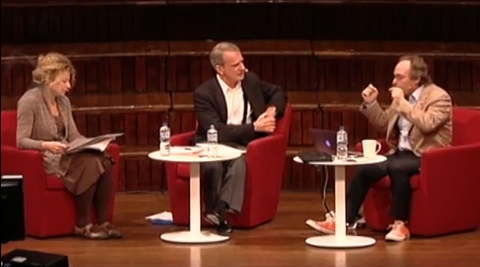
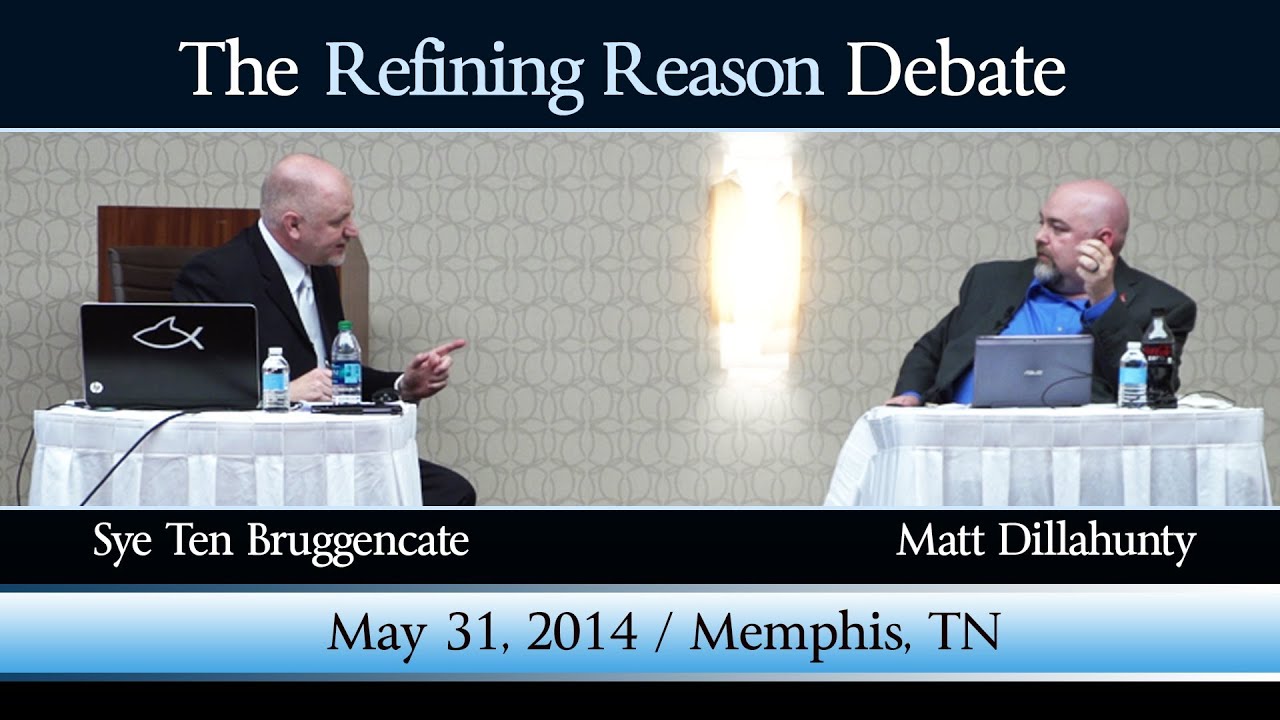
When New Atheism was at its peak, seeming to have the culture in its grasp, a resurgence of Christian apologetics emerged in response, and performed relatively well in analytic and philosophical apologetics. During public debates, they were more careful with arguments, more philosophically sound, and ironically, less likely to use rhetorical flourish than their atheist counterparts. They were ready to make precise claims, slow the argument down, and really discuss the arguments the New Atheists presented. They pointed out:
Science is not metaphysics, and metaphysical claims cannot be made from science.
God is distinct from a physical object in the universe.
Conceptions of theology that New Atheists were attacking were not representative of the Christian Church.
Scientism was a philosophical claim masquerading as neutrality.
Evolutionary accounts of biological development are not incompatible with Christianity.
In the setting of a formal debate, those retorts were highly effective. New Atheist arguments that claimed to render God inert, or prove that atheism was the default position, using physics, biology, etc., proved vulnerable to standard philosophical distinctions raised by apologists.3 Apologetics emerged looking disciplined and respectable.
Among apologists, it was certainly tempting to read this as progress. The arguments were sharp, New Atheism did not have answers, caricatures were exposed, and they appeared to have the high ground. But despite all of that, over the new few years, Christianity and religion continued to lose cultural prestige, perhaps more than ever.4
The Cultural Drift That Arguments Did Not Touch
There was a drift that Christianity, and even New Atheism, could not touch. Many New Atheists found their social group unsatisfying for their lack of shared values. A New Atheist could be a fifty-year-old, straight-laced Republican, a Wiccan who believes in magic, or a college student who finds the old ways of thinking regressive and oppressive. Other cultural views took hold that people believed better represented their shared values, as people began to identify more with their political alignment than their religious affiliation, or lack thereof. 5
In that context, I won’t say that apologetics lost credibility, but they did not gain the ground that they thought they did. It was not that people were not smart enough to understand the arguments. It was that they pursued value-based identity that the arguments did not touch. Cosmological arguments were just not interesting or relevant. The conclusion of the apologist, the namesake of this site, “Therefore, God exists”, was rejected, not because of the veracity of the argument, but because it was morally suspicious, socially regressive, and institutionally untrustworthy.
There were concrete reasons for this. Shared values are central to identity, and any level of moral disagreement is interpreted as being harmful. Apologists could not win the culture because they are not talking about, and in fact, avoided, subjects like sexual ethics, immigration, racism, police brutality, and more. It is not necessarily that they took the wrong position on these subjects, but that those political, shared values are what defined the cultural moment, and they quickly usurped any interest in cosmological arguments.
The Shared Misdiagnosis
Apologetics and New Atheism suffered the same loss during the cultural moment as a result of a surprising similarity. Both assumed that belief was primarily a matter of argument and evidence. New Atheists thought that if they told people “Hey, read the Bible. It’s ridiculous. Read The God Delusion“, it would cause a broad swath of people to say “Who designed the designer?” and their movement would gain a permanent foothold, belief would slowly dissolve as a result of scientific inquiry. On the other hand, apologists believed that their arguments for Christianity would destigmatize the faith, restore plausibility, and make people accept the arguments, and later the entire system of values by consequence.
Both views thought that people were just waiting for a decisive argument, fists pounding on the podium, where someone says defiantly, “And who, sir, created God?” and that would define the moment. But people were not waiting for the argument. People largely found the argument irrelevant. Whether belief collapsed under the weight of evidence, or whether belief could be evidential, was irrelevant. Instead, belief, or atheism, were untenable as a result of value-based, social factors. 6
The question was not, “Is Christianity true?” Instead, the question is the age-old question that Jesus assured us would be the question. “What kind of life does this require, and what does it cost me to affirm it?” Arguments and evidence were pointed in the wrong direction.
The Apologetic Pipeline That Never Existed
Apologists implicitly believed in a two-stage model, sometimes represented by biblical statements, such as “I have planted, Apollos watered; but God gave the increase.” The apologists’ job was to make the argument, swat down the atheists, prove decisively that there was an empty tomb. It relied on a two-stage model.
Intellectual assent comes first.
Pastoral formation and the instilling and persuading of biblical values comes later.
If they can just convince people that Christianity is true, or “more likely true than not”, the rest will sort itself out. The churches will help them work through the moral, social, value-based questions, and the existential implications. But for a lot of people who were convinced by the debate, they may have walked away with some interesting insight, and for a little while, they may have thought to themselves, “Yes, I think this is true”, but they did not proceed further down the pipeline.
The implicit pipeline may have worked in a culture where Christianity was socially normative, and where we all had the buffer to be able to say “Well, everyone does it.” However, it does not work in a culture where the cost is immediate, scaled to the level of one’s identity, and can be visible to everyone. It also does not work when theological questions that pertain to social issues are just as challenging as philosophical argumentsabout the existence of God.
The Partial Insight and Overreach of Presuppositionalism
The insight that I have shared is not new. There was a model of Christian apologetics that recognized this problem and attempted to address it, by rejecting neutrality altogether. Under the banner of Cornelius Van Til, the restoration and renewed interest in presuppositional apologetics presented Christianity as, not a hypothesis or a competing worldview, but as a precondition to intelligibility. At its best, this model did make an acknowledgment that a lot of apologists missed: Christianity is comprehensive, it is not a modular belief system, and it cannot be smuggled in piece by piece.
Presuppositionalism, though, overplayed its hand. Advocates claimed that they could resolve radical skepticism (the idea that nobody knows anything with certainty beyond core facts about their identity). They essentially mounted the Transcendental Argument for the Existence of God (TAG), which is to say without God, there is no ontological basis for truth claims. TAG is a legitimate, modest form of argumentation. However, instead of saying:
“If rationality is possible, then theism may be the best explanation.”
Presuppostionalists would say:
“Unless you presuppose Christianity, rationality is impossible.”
The TAG as formulated by the presuppositionalist became absolutist, exclusionary, and, oddly, immune from any critique, essentially unfalsifiable. The most blatant failure was the claim only Christianity could resolve radical skepticism. That claim is so outlandish because nobody can resolve radical skepticism; it is not solved by assuming that Christianity is true. Even Van Til was more reserved, and less likely to turn the TAG into a checkmate.
This approach to the argument did not solve the apologist’s problem: it only created more problems and worse perception. As soon as one asserts, “You cannot even reason about the world until you agree with my assumptions”, the dialogue is over. It looks like circularity masquerading as rigor, undue confidence, and an unwillingness to engage. Even apologists were hesitant about this model precisely because of these faults.
It was clear to everyone, including interlocutors, non-presuppositional apologists, and onlookers, that the argument overpromised. It could never deliver what it claimed.
When Talking Theology Works Better Than Defending It
All of this is not to say that presuppositionalism as a model is unsustainable. But the iteration of it that took hold during the 2010s was unsustainable, and doomed to fail. But what about a model of presuppositionalism that just assumes that Christianity is true, and has dialogue within that context? Then, we can move away from talking about transcendental arguments, cosmological arguments, historical methods of inquiry, and talk about the story of Christianity: sin, grace, forgiveness, desire, and hope. People are more restrained by questions like:
I know I’ve done too much to be forgiven.
Than they are by
How does the Bible deal with evolution?
This approach works because it does allow one to talk about apologetics if the need arises, but in a less formalized manner. We aren’t generating syllogisms, pulling up data, engaging with every point and counterpoint. The strengths of this model are such that they allow honest conversation, allow discussion about values and theology, and address what people really want to talk about. The drawback is that it can come off as evangelistic, whereas apologetics had the guise of academia. Another weakness is that it requires you to be a “jack of all trades”, to have an idea of what you are talking about when someone asks you about the trinity, what redemption is, why you are a believer, etc.
Critically though, this approach is straightforward. It does not promise cultural safety. It is not disguised as academia. It invites rather than persuades. It does not skip questions like, “What will this cost me?” Paradoxically, it aligns with Christian theology.
Accepting Christianity Was Never Supposed to Be Easy
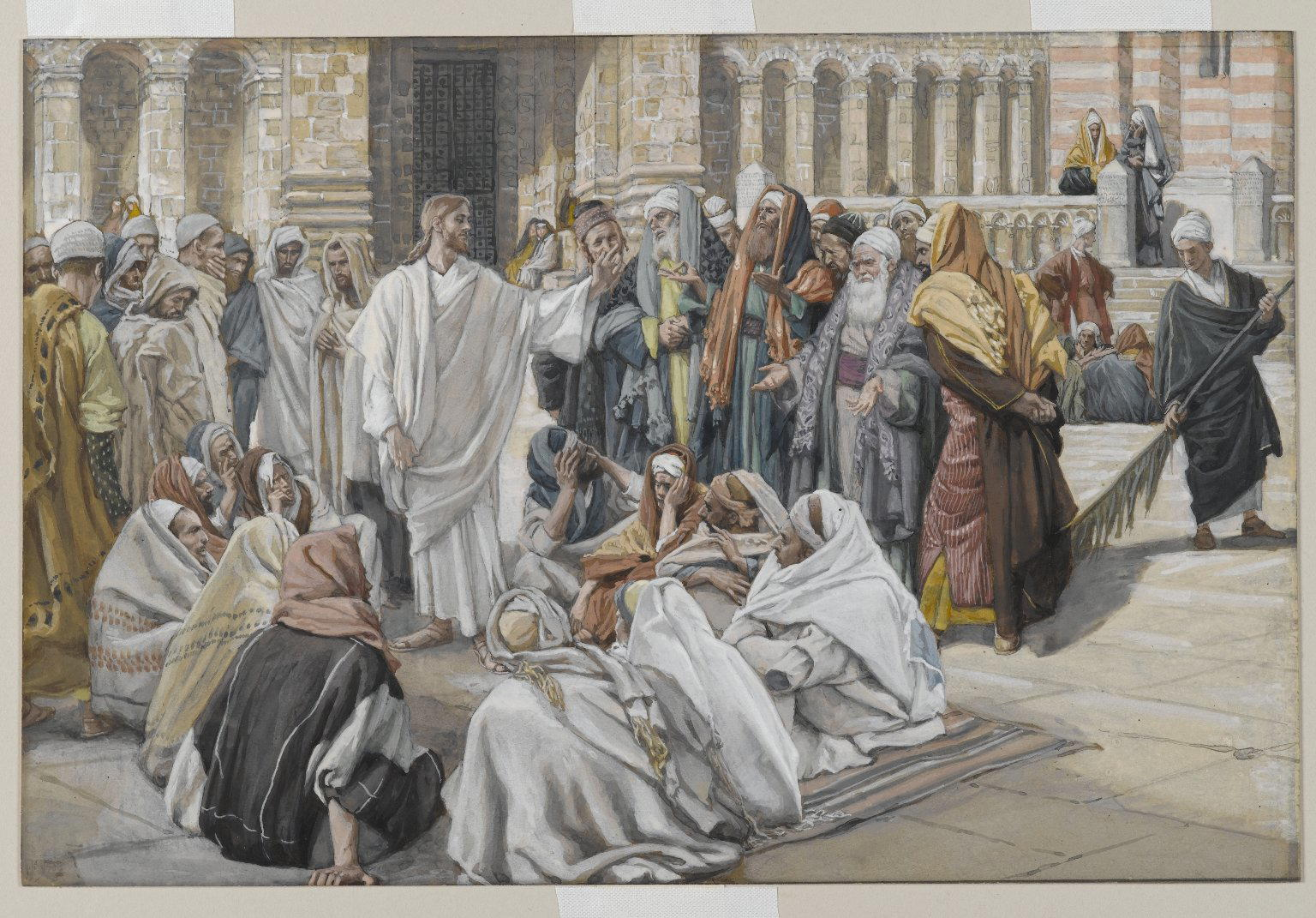
When Christianity grew out of Judaism, it was implicit that conversion would be challenging. Accepting that Jesus is the Messiah went against the grain of culture, and overthrew a lot of tradition. This is illustrated by Jesus saying, “I have come not to bring peace, but a sword.” He said several times that people will persecute and hate Christians. The change was so radical that eventually, Christianity was a distinct religion, not a sect of Judaism. As time went on, Christians began understanding passages about persecution and hatred from the world not in a Jewish context but in a broader context. Any movement that attempts to make Christianity acceptable at the cultural level must address the challenge of “What will this cost me?”
The idea that Christianity (or New Atheism) would emerge victorious as a result of rational demonstration was not a result of theology. It was the result of Enlightenment optimism. Apologists and New Atheists assumed that as Enlightenment-influenced westerners, people are scientifically-minded, and would respond to evidence and arguments. They underestimated the veracity of value-based identity, and politics.
The End of the Argument
The decline of both Christianity and New Atheism tells us something important. But what it tells us is not that arguments have no value. But they do not function as the primary driver of behavior and belief in public life. People are much more likely to cling to beliefs that form their identity, allow them to have a strong communal experience, and create dramatic narratives about the world.
Arguments and evidence are filtered through the lens of identity, values, and communal experience.
One might think that this means that intelligence is declining, people are favoring “emotion” over rational inquiry. But that seems incorrect on two counts.
I’m not convinced we were ever in a place where the idealistic Enlightenment-influenced, rational person was dominant in public life.
People are thinking systematically. The rational question of “What is true?” leads to the next question, “What does this mean for my life?” and “How does this align with my values and who I want to be?” If the latter questions are more important, people will start with that, and answer the former question in that context.
Where This Leaves Christianity
Christianity is not a contested hypothesis. It is not an idea in a marketplace of idea. It is a foreign system, replete with ideas and values that most people just do not align with. It can be learned or adopted, God can grant grace, but it cannot be rejected neutrally. Apologists aim at winning debates in the face of that reality. They may win the debate, but not the cultural moment.
The natural person does not accept the things of the Spirit of God, for they are folly to him, and he is not able to understand them because they are spiritually discerned.
1 Corinthians 2:14
And this is the judgment: the light has come into the world, and people loved the darkness rather than the light because their works were evil.
John 3:19
We preach Christ crucified, a stumbling block to Jews and folly to Gentiles.
1 Corinthians 1:23
“Richard Dawkins …does not hesitate, for instance, to claim that “natural selection is the ultimate explanation for our existence.” But this is a silly assertion and merely reveals that Dawkins does not understand the words he is using. The question of existence does not concern how it is that the present arrangement of the world came about, from causes already internal to the world, but how it is that anything (including any cause) can exist at all.” Hart, David Bentley (2009). Atheist Delusions: The Christian Revolution and Its Fashionable Enemies. New Haven, CT: Yale University Press. p. 103. ISBN 9780300164299. ↩︎
“This is not the philosophical atheism of Schopenhauer or Marx or Freud or Feuerbach. This is a sort of unthinking, simplistic religious criticism. It is primarily being fostered by individuals—like Sam Harris, Richard Dawkins—who have absolutely no background in the study of religion at all. … What we’re seeing now instead is a sort of armchair atheism—people who are inundated by what they see on the news or in media, and who then draw these incredibly simplistic generalizations about religion in general based on these examples that they see.” Reza Aslan on What the New Atheists Get Wrong About Islam; New York Magazine; 14 October 2014 ↩︎